
What are the roles in UX/UI design?
User experience has become a fundamental element in the design and development of digital products, as it not only drives customer satisfaction but can also significantly impact a brand’s commercial success.
In this article, we review the main roles within UX and how each contributes to creating products and services that meet users’ needs and expectations.
In Latin America, the UX field has been growing, with an observed increase in the demand for professionals across various countries. Companies from different sectors, such as technology, finance, and digital media, are actively seeking UX talent. This has led to a rise in educational offerings related to UX in the region, with universities and digital schools starting to offer courses, degrees, diplomas, and specializations in the field.
As a result, companies are increasingly recognizing the importance of UX for the success of their products and services, leading to greater integration of design teams.
Within UX, there are diverse roles and responsibilities carried out by professionals with different specializations. Some common UX roles include:
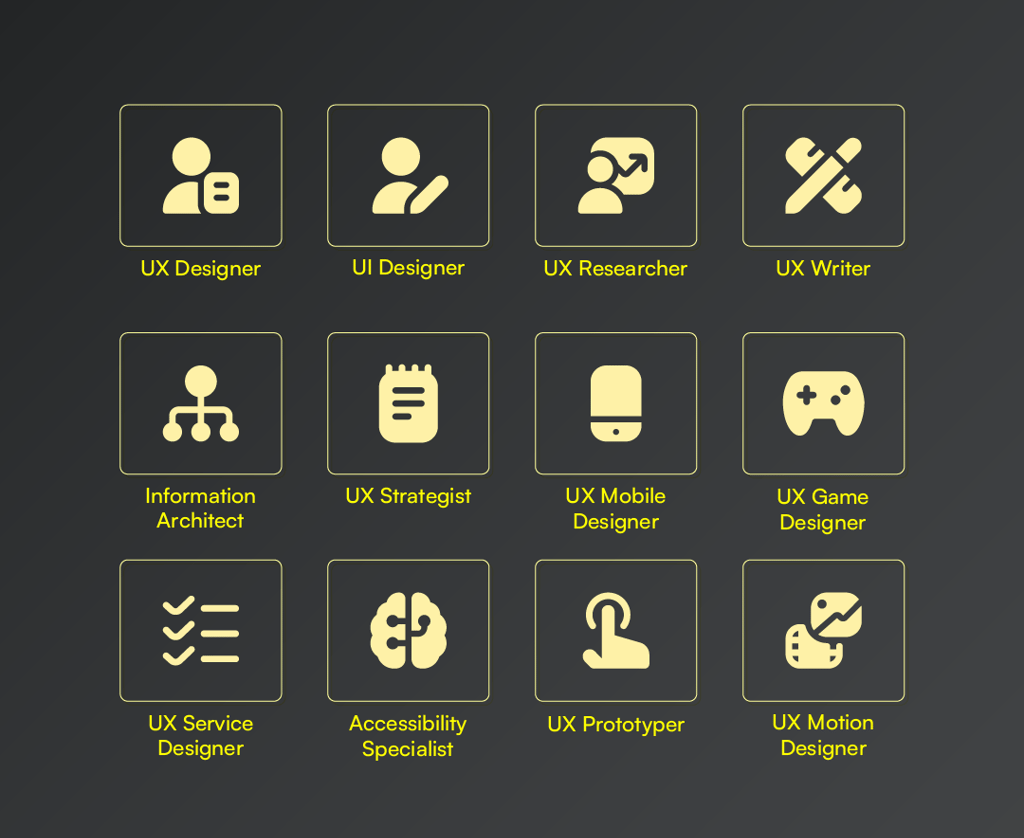
UX Designer: Responsible for creating the overall user experience of a product or service. This includes designing the user interface, defining flows, conducting usability tests, and ensuring the product is easy to use and satisfying for users.
UI Designer: Focuses on the aesthetics and visual appearance of the user interface. Works on color selection, typography, iconography, and layout to ensure the interface is visually appealing as well as functional.
UX Researcher: Dedicated to understanding users’ needs and behaviors, using methodologies and techniques such as surveys, interviews, usability testing, and more.
UX Writers: Focus on producing clear, concise, and effective text content that enhances the overall user experience in digital products and services, facilitating intuitive and understandable user interaction with strategic, effective writing.
Information Architect: Organizes and structures information within a system or website logically and accessibly for users, including creating sitemaps and flow diagrams.
UX Strategist: Defines the overall user experience strategy, aligning business objectives with user needs and overseeing its execution.
UX Mobile Designer: A subset of UX designers focused on creating user experiences specifically for mobile applications.
UX Game Designer: Designs user experiences in games, including gameplay, narrative, in-game user interfaces, and player feedback.
UX Service Designer: Focuses on designing user experiences across multiple touchpoints, considering the entire user journey within a service or product.
Accessibility Specialist: Ensures products and services are accessible to all users, complying with accessibility guidelines to guarantee universal reach of digital products.
UX Prototyper: Creates interactive representations of designs to test concepts before final implementation, including low-fidelity and high-fidelity prototypes.
UX Motion Designer: Specializes in producing animations and transitions that enhance the user experience, adding movement and dynamism to interfaces.

Quite a few roles, don’t you think? Remember, these are some of the most common roles in the UX field today, but there are others as well.
The field of user experience (UX) is continuously evolving, and with it, new roles and specializations emerge.
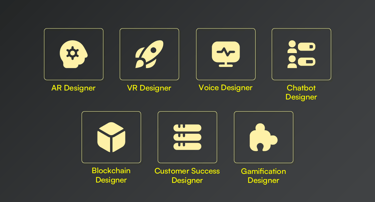
Some emerging UX roles include:
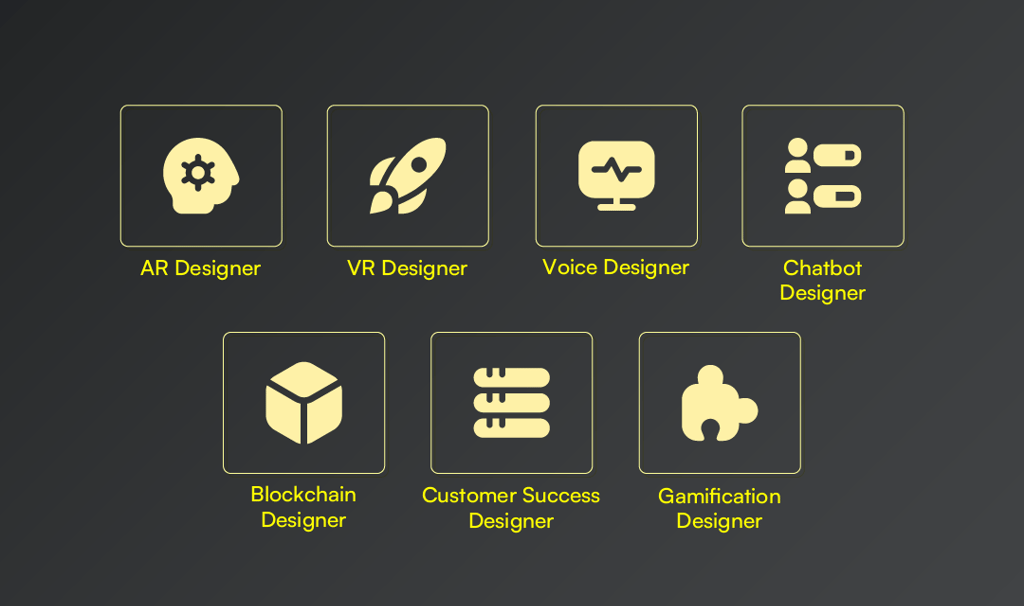
AR Designer (Augmented Reality Designer): Focuses on creating user experiences for augmented reality applications and devices, such as AR glasses, mobile apps, and games.
VR Designer (Virtual Reality Designer): Similar to AR Designers, but focused on virtual reality, creating immersive experiences in virtual environments.
Voice Designer: With the rise of voice assistants and voice-enabled devices, these designers focus on producing effective and pleasant conversational interfaces.
Chatbot Designer: Specializes in creating chatbots and virtual assistants that interact with users via text or voice on digital platforms.
Blockchain Designer: Focuses on generating user experiences in applications and systems based on blockchain technology, such as cryptocurrency wallets and decentralized apps (DApps).
Customer Success Designer: Works on strategies and designs that promote customer retention and satisfaction throughout their user lifecycle.
Gamification Designer: Specializes in integrating game elements and gamification into products and applications to increase user engagement and motivation.
It is important to highlight that these are just some examples of emerging roles in the UX field. Technological evolution and the growing importance of user experience in the industry continue to create new opportunities and specializations in this area.
Keep in mind that UX professionals work in interdisciplinary teams, collaborating closely with designers, developers, researchers, and other specialists to create effective user experiences.
At Aura, we believe it is essential to foster teamwork across our different areas to create products and services that are effective, user-centered, and aligned with business objectives.
Say hello
Contact
hello@aurauxstudio.com
Buenos Aires, Argentina
About us
Services
UX Design and Development
Strategy & Audit


Let's design the future
Aura UX Studio 2024